










Cutco Cares
#1836LD
Cutco Cares 2026 - Alzheimer's Association®
$294
Regular shipping included
Now through June 30, 2026.
Join the fight to end Alzheimer’s with Cutco Limited-Edition Purple Product. Cutco has partnered with the Alzheimer’s Association® to offer specially-engraved Purple products in support of Alzheimer’s and Brain Awareness Month.
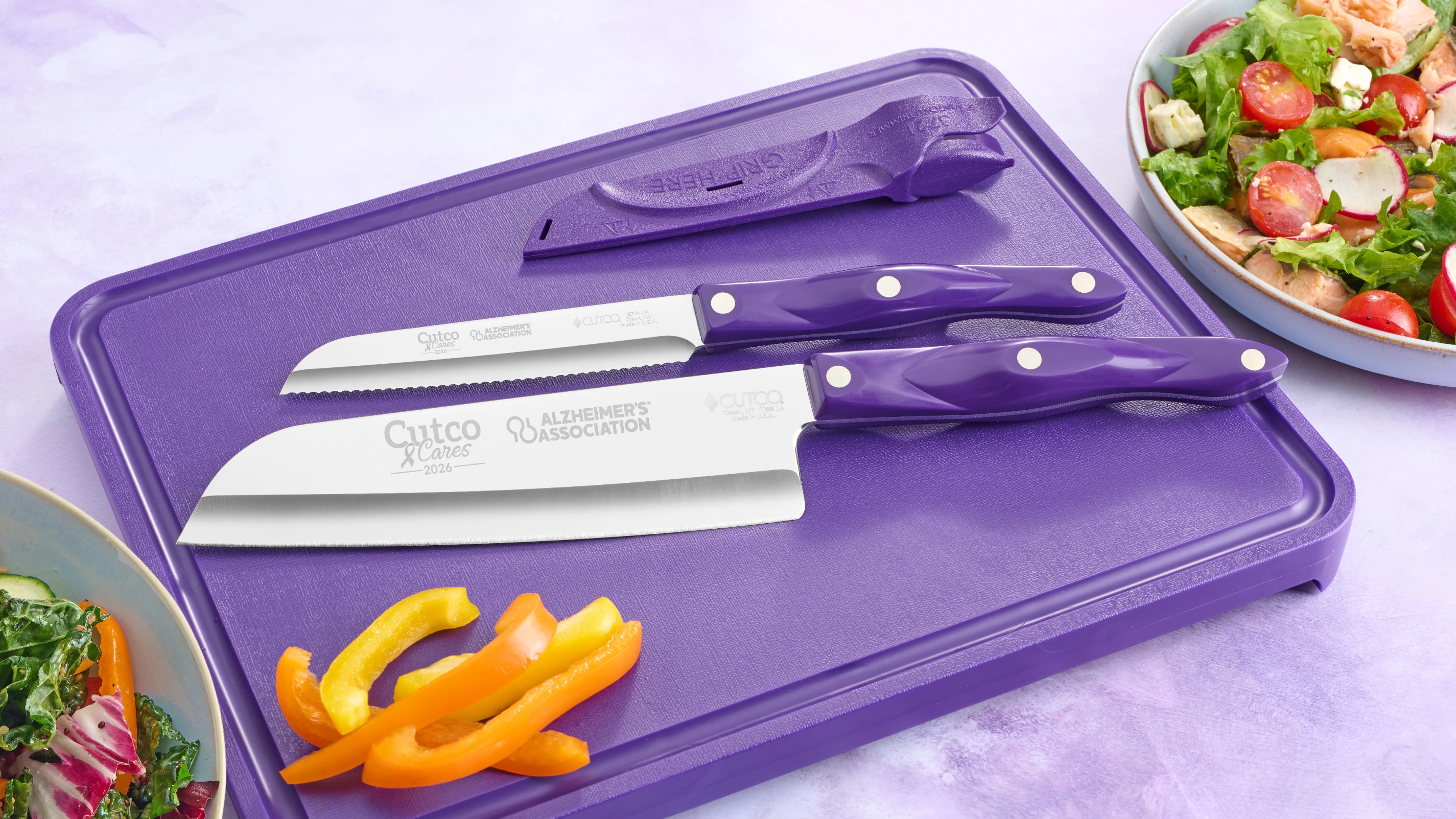
Purple Santoku-Style Cook's Combo includes 5 pieces:
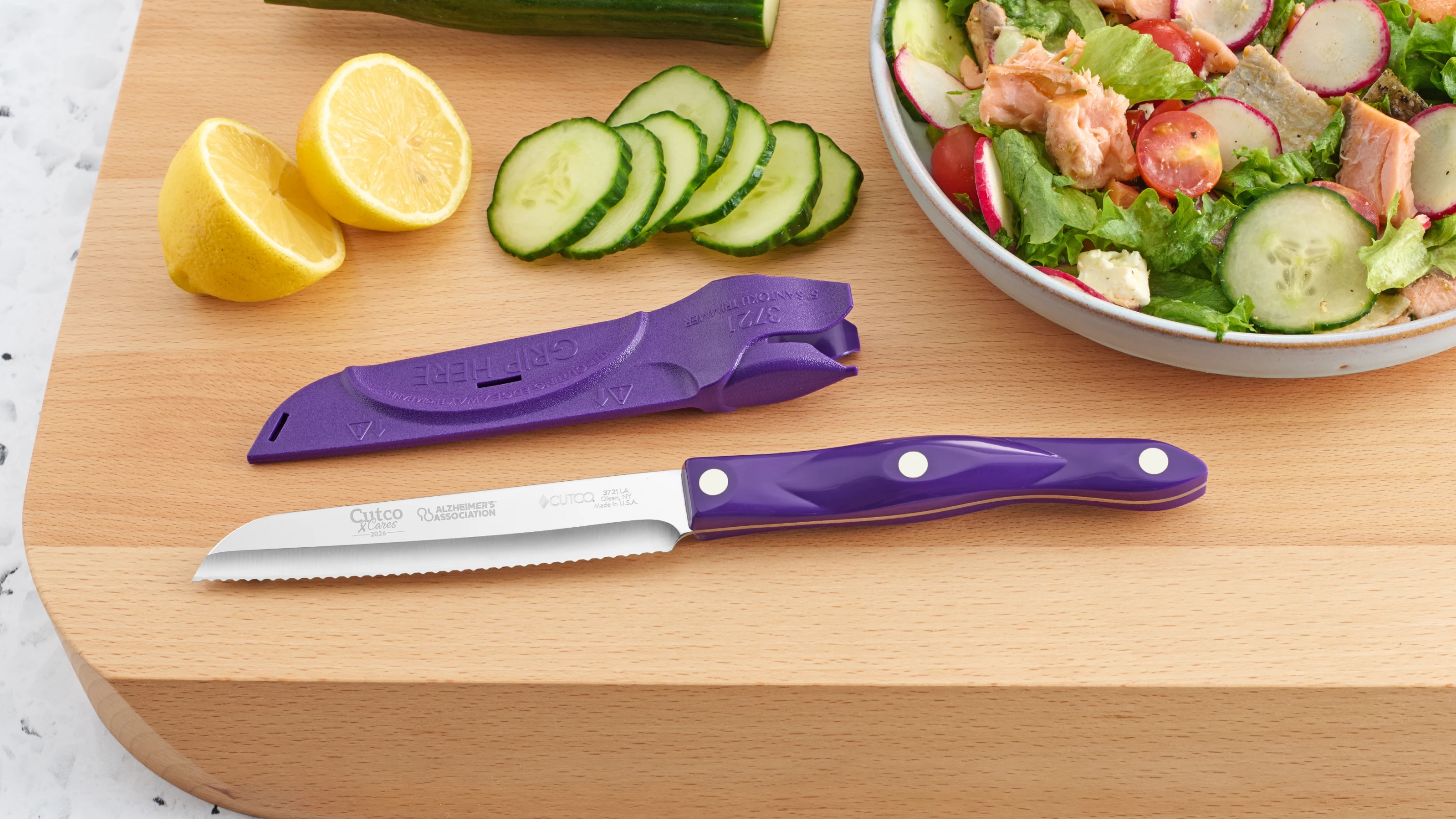
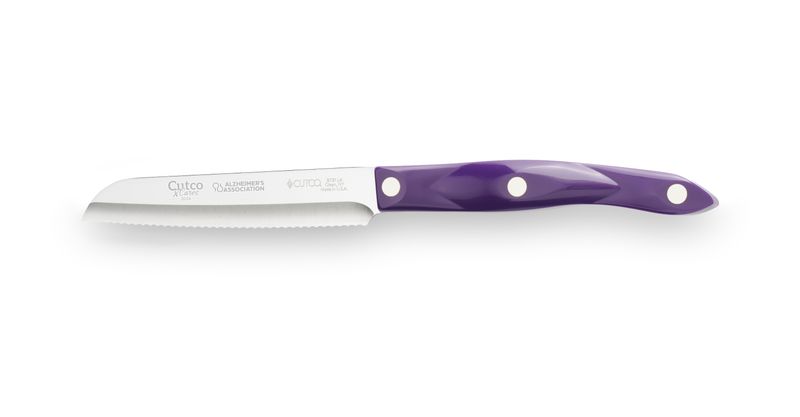 Purple Santoku-Style Trimmer
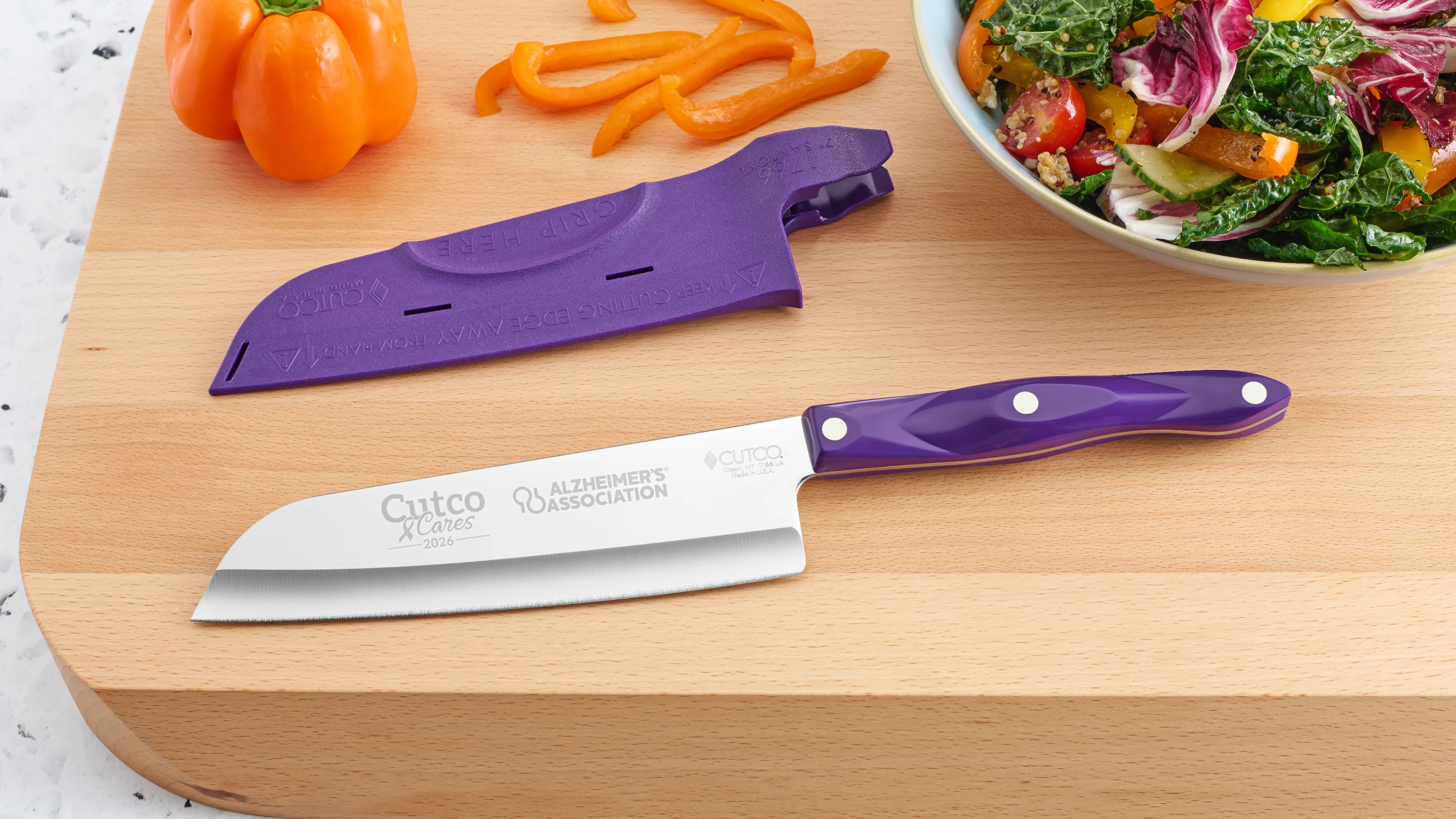
  Purple 7" Santoku
 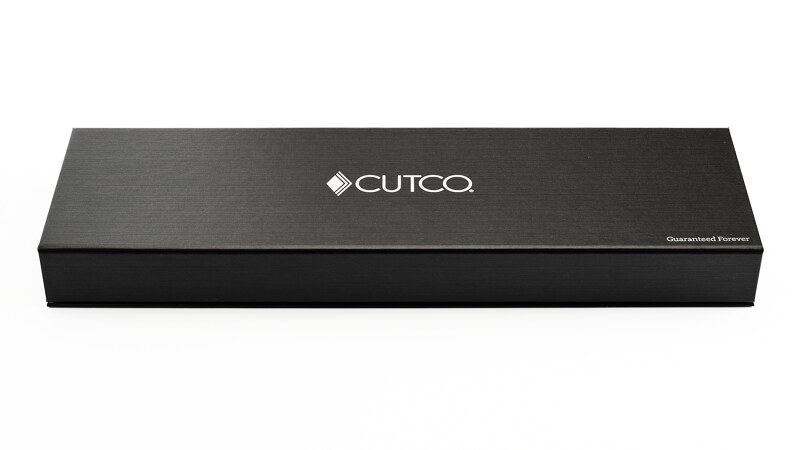 Gift Box
 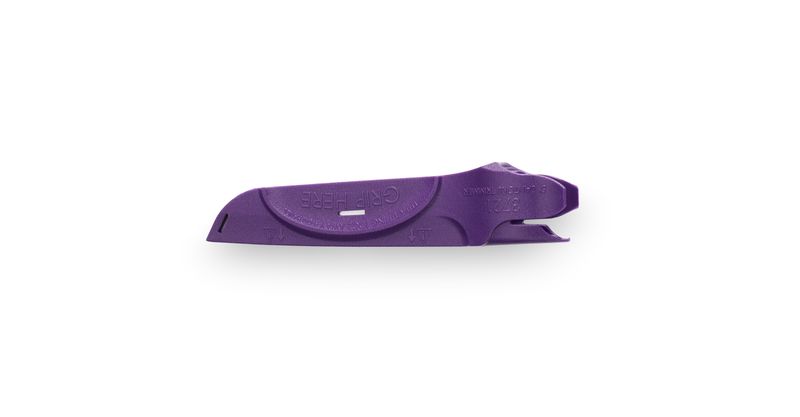 Purple Santoku-Style Trimmer Sheath
 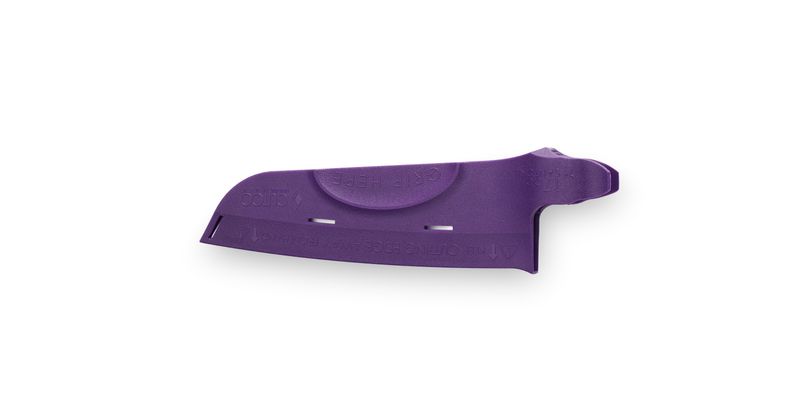 Purple 7" Santoku Sheath
 | Purple Santoku-Style TrimmerSpecs | |
|---|---|
| Material - Blade | 440A high-carbon, stainless steel |
| Material - Handle | Highly engineered thermo-resin |
| Length - Blade | 4-7/8" |
| Length - Overall | 10" |
| Weight | 3.1 oz. |
| Edge | Double-D® |
| Purple 7" SantokuSpecs | |
|---|---|
| Material - Blade | 440A high-carbon, stainless steel |
| Material - Handle | Highly engineered thermo-resin |
| Length - Blade | 7-1/4" |
| Length - Overall | 12-3/4" |
| Weight | 6.6 oz. |
| Edge | Straight |
| Gift BoxSpecs | |
|---|---|
| Dimensions | 5-1/4"W × 2"H × 17"L |
| Purple Santoku-Style Trimmer SheathSpecs | |
|---|---|
| Material - Sheath | Highly engineered thermo-resin, available in Purple only |
| Length - Overall | 6-3/8" |
| Weight | 1 oz. |
| Purple 7" Santoku SheathSpecs | |
|---|---|
| Material - Sheath | Highly engineered thermo-resin, available in Purple only |
| Length - Overall | 8-3/4" |
| Weight | 1.9 oz. |

The mission of the Alzheimer's Association is to lead the way to end Alzheimer's and all other dementia — by accelerating global research, driving risk reduction and early detection, and maximizing quality care and support.
Why Cutco Cares
Through the sale of Cutco Purple Product during Alzheimer's and Brain Awareness Month in June, we want to promote the story of the Alzheimer’s Association® as the leading voluntary health organization in Alzheimer’s care, support and research, while establishing the personal connection Cutco has with Alzheimer’s as it relates to our Cutco family.

The Alzheimer’s Association is the leading voluntary health organization in Alzheimer’s care, support and research. Founded in 1980 by a group of family caregivers and individuals interested in research, the Association includes a Home Office in Chicago, a public policy office in Washington, D.C., and a presence in communities across the country.
Over 7 million Americans are living with Alzheimer’s and nearly 13 million Americans provide unpaid care for people with Alzheimer’s or other dementia. The Alzheimer’s Association addresses this crisis by providing education and support to the millions who face dementia every day, while advancing critical research toward methods of treatment, prevention and, ultimately, a cure.
Care & Support
They work on a national and local level to provide care and support for all those affected by Alzheimer’s and all other dementia.
Research
As the largest nonprofit funder of Alzheimer’s research, the Association is committed to advancing vital research toward methods of treatment, prevention and, ultimately, a cure.
Advocacy
The Association is the leading voice for Alzheimer’s disease advocacy, fighting for critical Alzheimer’s research and care initiatives at the state and federal level.
The Alzheimer’s Association encourages everyone to adopt healthy behaviors that research shows can help maintain a healthy brain. For more resources on brain health, visit alz.org/brainhealth.
1
Be curious! Put your brain to work and do something that is new for you. Learn a new skill. Try something artistic. Challenging your mind may have short- and long-term benefits for your brain.
2
Education reduces the risk of cognitive decline and dementia. Encourage youth to stay in school and pursue the highest level of training possible. Continue your own education by taking a class at a local library or college, or online.
3
Engage in regular exercise. This includes activities that raise your heart rate and increase blood flow to the brain and body. Find ways to build more movement into your day — walking, dancing, gardening — whatever works for you!
4
Help prevent an injury to your head. Wear a helmet for activities like biking, and wear a seatbelt. Protect yourself while playing sports. Do what you can to prevent falls, especially for older adults.
5
Quitting smoking can lower the risk of cognitive decline back to levels similar to those who have not smoked. It's never too late to stop.
6
Medications can help lower high blood pressure. And healthy habits like eating right and physical activity can help, too. Work with a health care provider to control your blood pressure.
7
Type 2 diabetes can be prevented or controlled by eating healthier, increasing physical activity and taking medication, if necessary.
8
Eating healthier foods can help reduce your risk of cognitive decline. This includes more vegetables and leaner meats/proteins, along with foods that are less processed and lower in fat. Choose healthier meals and snacks that you enjoy and are available to you.
9
Talk to your health care provider about the weight that is healthy for you. Other healthy habits on this list — eating right, exercising and sleeping well — can help with maintaining a healthy weight.
10
Good quality sleep is important for brain health. Stay off screens before bed and make your sleep space as comfortable as possible. Do all you can to minimize disruptions. If you have any sleep-related problems, such as sleep apnea, talk to a health care provider.
The Alzheimer’s Association does not endorse any product or service.
Added to cart

 Chat
Chat